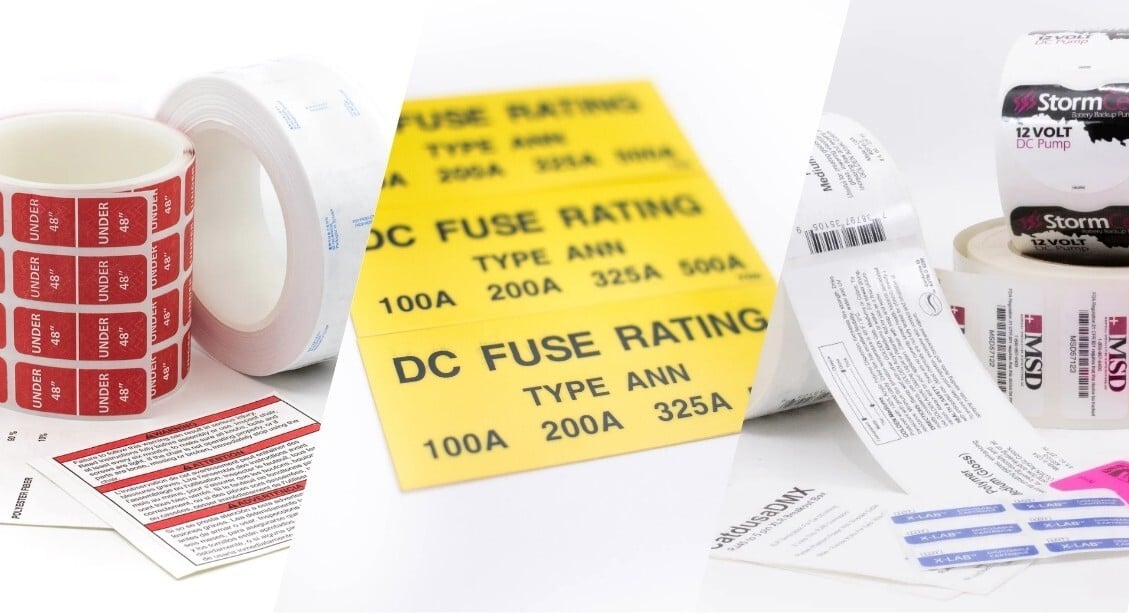



Tight-tolerance labels are crucial for precision, compliance, and efficiency in manufacturing. Learn if they're the right solution for your product's needs.
Tight-Tolerance Labels: Why Precision Matters More Than You Think
In many applications, a label is far more than a branding element. It can serve as a critical identifier, a safety communication tool, a compliance requirement, or an essential component of a manufacturing process. When that label must align precisely with equipment, fit within a limited footprint, survive harsh environments, or remain readable over time, tolerances become a key consideration.
For engineers, product managers, and procurement teams, understanding tight-tolerance label requirements can help avoid production issues, field failures, and unexpected costs.
What Are Tight-Tolerance Labels?
Tight-tolerance labels are labels manufactured to meet strict dimensional, material, printing, or performance requirements. Unlike standard labels, these products are expected to deliver consistent results even when there is very little room for variation.
Examples include:
- Serialized asset tracking labels
- Medical device identification labels
- Industrial equipment nameplates
- Safety and warning labels
- Electronics labels and component markers
- Aerospace identification labels
In these applications, even minor inconsistencies can create challenges during assembly, inspection, scanning, or product use.
Why Tight Tolerances Matter
Many products are designed with increasing levels of precision. Components are shrinking, regulatory requirements are expanding, and automated manufacturing systems rely on repeatability.
A label that varies slightly in size, print registration, adhesive placement, or material construction can affect:
- Barcode readability
- Automated application processes
- Product aesthetics
- Regulatory compliance
- Long-term durability
- Traceability programs
The cost of a failed label can be significantly greater than the cost of the label itself, especially when rework, recalls, or production delays are involved.
The Four Factors That Define Label Precision
1. Dimensional Accuracy
The physical size and shape of a label often need to fit precise design parameters. This is especially important when labels are applied to:
- Medical devices
- Electronics housings
- Equipment panels
- Small industrial components
Precision converting processes such as die cutting, laser cutting, slitting, and laminating help ensure consistent dimensions throughout production. Tapecon's converting capabilities include multiple precision cutting and finishing technologies that support complex geometries and demanding applications.
2. Print Registration and Readability
A label may contain critical information such as:
- Variable data
- Serialization
- Barcodes
- QR codes
- Security features
- Regulatory markings
Maintaining print accuracy ensures information remains legible and scannable throughout the product lifecycle. Advanced digital and flexographic printing technologies can support high-resolution graphics, variable data, and security printing features while maintaining consistency from run to run.
3. Material Performance
Precision is not limited to appearance. Labels must often maintain performance when exposed to:
- Chemicals
- Moisture
- UV exposure
- Abrasion
- Extreme temperatures
- Sterilization processes
Selecting the right facestock, adhesive, coating, and laminate is essential to achieving long-term performance. Material expertise plays a major role in ensuring labels continue functioning after deployment in real-world conditions. Tapecon supports a wide range of durable printing, coating, laminating, and specialty material converting solutions to address these challenges.
4. Manufacturing Consistency
A single prototype may perform perfectly, but the real challenge is maintaining the same quality across thousands or millions of parts.
Manufacturing consistency depends on:
- Controlled processes
- Quality systems
- Material management
- Repeatable production methods
- Inspection procedures
Organizations operating within regulated industries often require manufacturing partners that can support quality-driven production environments. Tapecon maintains certifications and quality standards that help support demanding life science, industrial, and aerospace applications.
Questions to Ask Before Specifying a Tight-Tolerance Label
Before moving into production, consider:
- What environmental conditions will the label encounter?
- Is barcode or variable-data accuracy critical?
- What dimensional tolerances are acceptable?
- Will the label be manually or automatically applied?
- Are there regulatory or compliance requirements involved?
- How long must the label remain functional?
Answering these questions early can help prevent costly redesigns or production issues later in the process.
Conclusion
Tight-tolerance labels may seem like a small component of a larger product, but their impact on manufacturing efficiency, product functionality, traceability, and compliance can be substantial. When precision matters, success depends on the right combination of materials, printing technologies, converting expertise, and quality-focused manufacturing processes.
With more than a century of experience supporting product teams across life science, industrial, and aerospace markets, Tapecon helps organizations develop durable, high-performance labeling solutions designed for demanding applications. If you're evaluating a new label specification or facing performance challenges with an existing design, connect with our team to discuss the requirements of your application and explore potential solutions.